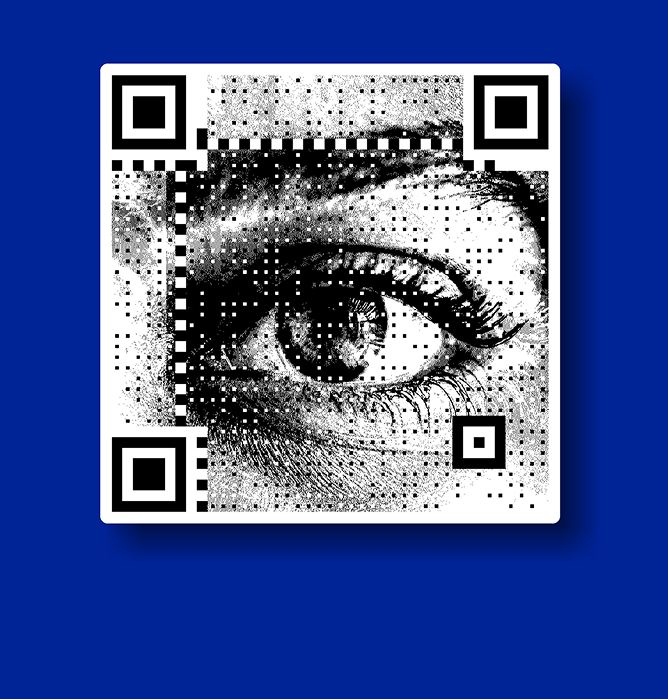
Halftone QR Code Generator
Create halftone-style QR codes that blend visual texture with dependable scan performance.
Halftone QR codes use dot-based patterns to introduce artistic depth while preserving the clarity needed for real-world scanning.
Ideal for designers and brands, these QR codes integrate naturally into posters, editorials, and creative layouts—adding character without sacrificing usability across print and digital formats.
What is a Halftone QR Code?
A halftone QR code uses dot-based or patterned textures instead of solid blocks.
The underlying QR structure remains intact while the visual style introduces depth and nuance.
Halftone patterns differ from standard solid QR designs by offering a more artistic look.
They are often chosen when QR codes are meant to contribute to visual storytelling rather than stand apart from it.
Why Designers Use Halftone QR Codes
Designers choose halftone QR codes to add visual interest while maintaining function.
- Adds texture and depth to QR codes
- Helps QR codes feel more artistic and intentional
Allows QR codes to blend seamlessly into graphic layouts
Can You Create Halftone QR Codes for Free?
Many users begin experimenting with halftone QR codes at no cost.
Free creation options are commonly used to explore visual impact, test layouts, or preview how halftone patterns behave in real designs.
This flexibility encourages creative exploration before wider or long-term use.
How Halftone QR Codes Remain Scannable
Halftone QR codes remain scannable because they preserve the core structural elements that scanners rely on. The three position markers, quiet zone, and data modules are kept intact, even when visual patterns are applied.
The halftone effect works by varying dot density rather than breaking the QR grid. This means the data is visually stylised but mathematically unchanged.
Additionally, error correction plays a key role in scannability. QR codes include built-in redundancy, so even if parts of the design are altered or softened for visual appeal, the scanner can reconstruct the data.
Where Halftone QR Codes Are Commonly Used
Halftone QR codes are frequently used in design-forward environments, including:
- Creative marketing campaigns
- Posters and print designs
- Editorial and magazine layouts
- Brand-led visual storytelling
These contexts benefit from QR codes that feel visually integrated.
Halftone QR Codes and Creative Expression
Halftone QR codes allow brands to turn functional QR patterns into visual storytelling elements. By blending dots, gradients, and imagery into the QR structure, they transform a utility tool into a design asset that complements campaigns, packaging, or artwork without losing purpose.
They give designers freedom to align QR codes with brand aesthetics, moods, or themes. Instead of standing out as a rigid black-and-white square, a halftone QR code can seamlessly merge with posters, ads, or digital visuals while still guiding users to the intended destination.
Most importantly, halftone QR codes balance creativity with usability. They prove that QR codes don’t have to sacrifice beauty for function. When designed correctly, they enhance engagement by inviting curiosity and interaction through thoughtful visual expression.
Halftone QR Codes vs Standard QR Codes
Halftone QR codes and standard QR codes serve the same core function, but they differ in how they look and how they engage users. Standard QR codes follow a rigid black-and-white grid, designed purely for maximum clarity and universal scannability.
Halftone QR codes, on the other hand, introduce artistic patterns, gradients, or imagery into the QR structure. They rely on dot density and contrast rather than solid blocks, making them visually appealing while still retaining the essential elements scanners need to read the code.
In practical use, standard QR codes prioritise simplicity and speed, while halftone QR codes prioritise design-led engagement. Brands often choose standard QR codes for utility-driven use cases, and halftone QR codes when visual impact and brand expression matter just as much as functionality.
Best Practices When Creating Halftone QR Codes
Effective halftone QR codes follow responsible design principles:
- Avoid excessive visual density or tight dot patterns
- Maintain clear contrast between code and background
- Always test scans across devices and lighting conditions
These practices balance creativity with reliability.
Create a Halftone QR Code
Create QR codes that blend creativity with function.
QRKY helps you generate halftone QR codes that are visually distinct, easy to scan, and suitable for real-world creative use.
Latest Blogs on Halftone & Creative QR Codes
Halftone QR codes sit at the intersection of design and usability. These articles explore how artistic treatments can be applied responsibly without compromising scan reliability
FAQs
What is a halftone QR code?
A halftone QR code uses dot-based patterns instead of solid blocks to create a textured, artistic look.
Do halftone QR codes scan properly?
Yes, when contrast, spacing, and structure are maintained.
Can I create a halftone QR code for free?
Many tools allow users to experiment with halftone QR codes at no cost.
Where are halftone QR codes best used?
They are commonly used in posters, editorials, campaigns, and creative branding materials.
Are halftone QR codes suitable for print?
Yes, when tested properly, they work well in print environments.
Do halftone QR codes work on all devices?
Most modern smartphones and scanners can read them when properly configured.
Can halftone QR codes be reused across designs?
Yes, they can be reused as long as placement and contrast remain appropriate.
What design mistakes should be avoided with halftone QR codes?
Overly dense patterns, low contrast, and skipping scan tests can reduce reliability.
Are halftone QR codes suitable for business use?
They are suitable when creative expression aligns with brand identity and usability needs.
Are halftone QR codes good for long-term use?
Yes, when designed thoughtfully and tested, they can be used reliably over time.