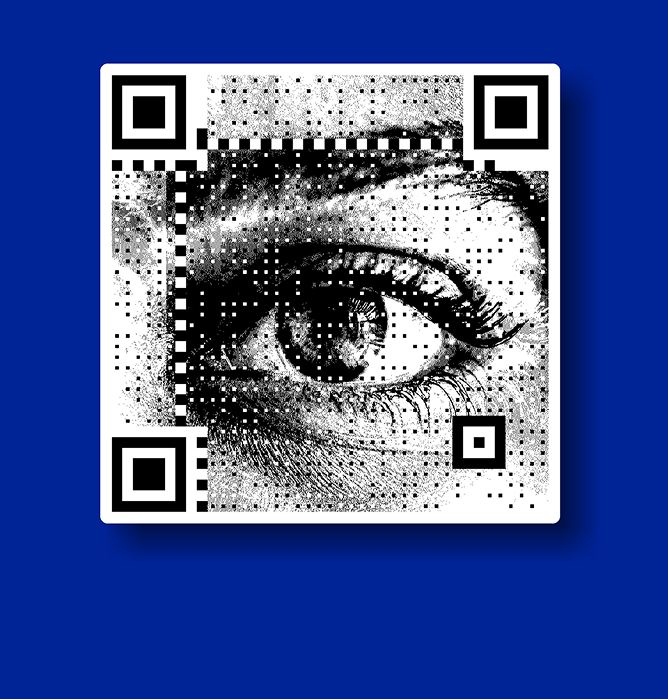
Small QR Code Generator
Create compact QR codes designed for limited spaces without compromising scan reliability. Small QR codes are commonly used on labels, packaging, business cards, and tight layouts where space is minimal but access still matters.
With QRKY, you can generate small QR codes that remain clear, scannable, and suitable for both print and digital use—making them practical for everyday business and design needs.
What Is a Small QR Code?
A small QR code is a QR code generated at a reduced size to fit space-constrained designs.
While visually compact, it follows the same QR structure as standard codes.
Small QR codes are useful when designs require minimal visual disruption while still offering quick access through scanning.
- Ideal for business cards, labels, tags, and product inserts
- Helps maintain clean, clutter-free layouts in dense designs
- Commonly used in luxury, minimalist, and premium branding
- Works well when paired with high-contrast backgrounds
- Best suited for short links and low-data QR content
Why Businesses Use Small QR Codes
Businesses use small QR codes to integrate scannable links without overpowering their design. They help maintain visual balance while still enabling quick digital access.
- Preserve clean and minimal layouts
- Fit easily into limited print spaces
- Support premium and subtle branding
- Blend naturally with packaging and labels
- Keep focus on the main visual content
Can You Create a Small QR Code for Free?
Many users create small QR codes at no cost, particularly when testing layouts or experimenting with size and placement.
Free creation options are commonly used to validate scan performance before final printing or distribution.
How Small QR Codes Remain Scannable
Small QR codes remain scannable because they retain the same underlying structure as larger QR codes. The finder patterns, alignment elements, and data modules are preserved, only scaled down in size.
Scannability is also supported by adequate contrast between the QR code and its background. Clear colour separation allows scanners to detect the code quickly, even when the physical size is reduced.
Additionally, modern smartphone cameras and QR readers are optimised for small-format scanning. When combined with proper error correction and sufficient quiet zone spacing, small QR codes scan reliably in real-world conditions.
Where Small QR Codes Are Commonly Used
Small QR codes are widely used in situations where space is limited but quick access is still needed. Common examples include:
- Product labels and packaging
- Business cards
- Stickers and tags
- Compact print materials
Small QR Codes and Space-Efficient Design
Small QR codes enable space-efficient design without compromising functionality, which aligns closely with how QRKY approaches QR creation. They allow brands to add scannable touchpoints in tight layouts while keeping designs clean, intentional, and visually balanced.
With QRKY, small QR codes can still be dynamic and editable, making them ideal for packaging, labels, and compact print assets. Marketers can optimise destinations or update links without reprinting, even when space is limited.
Most importantly, QRKY ensures that space efficiency doesn’t come at the cost of performance. Through smart generation and tracking capabilities, small QR codes remain reliable, measurable, and campaign-ready—no matter where they are placed.
Small QR Codes vs Standard-Size QR Codes
Small QR codes and standard-size QR codes serve the same scanning purpose but differ in how they fit into design and campaign needs. Standard-size QR codes are more visible and are often used when space is available and fast discovery is a priority.
Small QR codes are designed for space-constrained environments where subtlety matters. They blend seamlessly into compact layouts such as packaging, labels, or business cards without disrupting the overall visual hierarchy.
From a campaign perspective, standard-size QR codes maximise immediate noticeability, while small QR codes prioritise design efficiency. With QRKY, both formats remain dynamic and trackable, allowing businesses to choose size based on context without sacrificing performance.
Best Practices When Creating Small QR Codes
Creating small QR codes requires careful design choices to maintain usability. Best practices include:
- Avoid overcrowding information
- Ensure sufficient contrast
- Test scans at real-world distances
These practices help prevent scan failures in compact formats.
Create a Small QR Code
Create QR codes that fit seamlessly into limited spaces without disrupting your design.
Compact, clear, and reliable—small QR codes designed for practical use.
Latest Blogs on Small QR Codes & Scan Reliability
QR code size plays a critical role in scan performance, especially when space is limited. These articles explore how compact QR codes behave in real-world environments, common sizing mistakes, and best practices to ensure small QR codes remain scannable across print and digital formats.
FAQs
What is a small QR code?
A small QR code is a QR code generated at a reduced size to fit compact layouts or limited spaces.
Do small QR codes scan properly?
Yes, when designed with proper contrast, spacing, and testing, small QR codes scan reliably.
What is the smallest usable QR code size?
The minimum usable size depends on viewing distance, print quality, and contrast rather than a fixed measurement.
Can I create a small QR code for free?
Many tools allow users to create small QR codes at no cost, especially for testing and experimentation.
Where are small QR codes best used?
They are best used on labels, business cards, packaging, tags, and compact print materials.
Are small QR codes suitable for professional use?
Yes, when tested properly, small QR codes are commonly used in professional and commercial settings.
Do small QR codes work on printed materials?
Yes, provided they are printed clearly and tested under real-world conditions.
Should small QR codes be used for long-term campaigns?
They can be, as long as scan reliability is validated and placement remains consistent.
Does reducing QR code size affect scan speed?
Yes, very small QR codes may take slightly longer to scan, especially in low-light or low-contrast conditions. Proper testing helps maintain smooth scan performance.
Can small QR codes be used on digital screens?
Yes, small QR codes work well on digital screens when displayed clearly and viewed at an appropriate distance, making them suitable for mobile and desktop use.